- Lectures and Symposiums
The World of Shojo Manga @ Maison de la culture du Japon à Paris
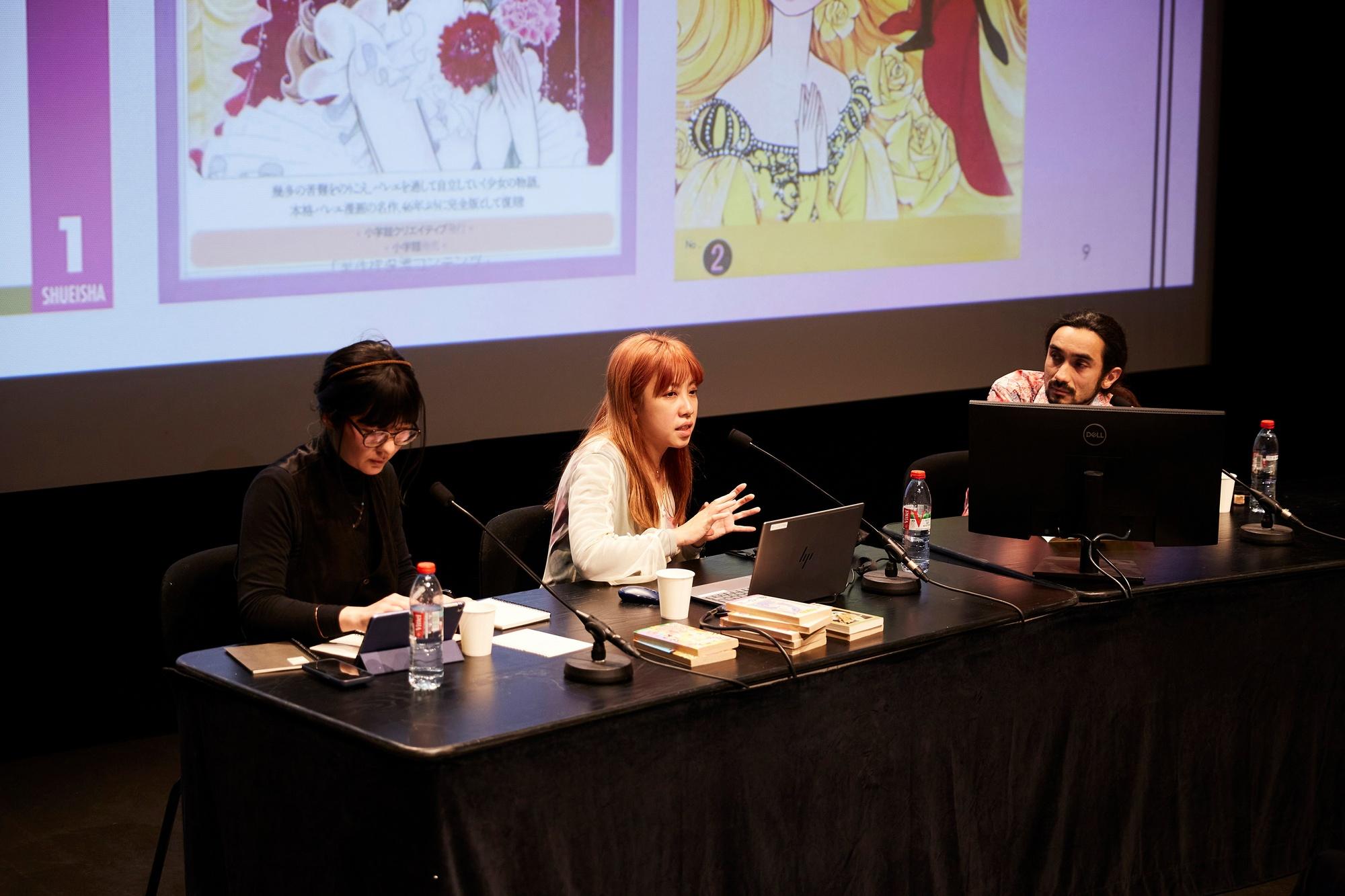
In January 2026, ahead of the opening in October 2026 of Shojo Manga Infinity: Moto Hagio, Ryoko Yamagishi, and Waki Yamato, the National Art Center, Tokyo held talk events in London and Paris featuring Rei Yoshimura, a curator at the NACT and one of the few researchers who specialize in this field.
The talks took place in the cities where MANGA⇔TOKYO (La Villette, 2018) which the NACT had organized, and Manga (the British Museum, 2019) which the NACT had been deeply involved in planning, were previously held. In conversation with local specialists, Yoshimura discussed how to bring manga to the museum and the diverse world of shojo manga.
Although manga has long been associated with a publishing system segmented by age and gender, shojo manga occupies a singular place in Japanese cultural history. Often reduced abroad to a category of sentimental stories aimed at a teenage female readership, it in fact constitutes a field of aesthetic, narrative, and social experimentation of remarkable richness. It was this complexity that Rei Yoshimura, curator at the National Art Center, Tokyo, and Bruno Pham, Editorial Director at Akata, set out to explore during a lecture held at la Maison de la culture du Japon à Paris (MCJP), devoted to the history and challenges of shojo manga. Both speakers were introduced by Ko Miryon, Senior Manager in charge of international projects at the National Art Center, Tokyo, and Hitoshi Suzuki, President of the MCJP, before a full audience.
A recognized specialist in manga studies, Rei Yoshimura draws on a dual academic and museological background. After serving as a curator in the manga department of the Kawasaki City Museum from 2014 to 2017, she joined the National Art Center, Tokyo, as a visiting researcher in 2017, before taking up her current position there in 2021. Through this lecture, titled The World of Shojo, the curator offered a historical overview of shojo manga while presenting the intellectual foundations of the exhibition she is preparing around three major figures from its golden age. This exhibition, Shojo Manga Infinity, will be held from October 28, 2026 to February 8, 2027 at the National Art Center, Tokyo.
Rei Yoshimura opened the lecture with a structural observation: since the postwar period, the Japanese manga market has been built on an extremely precise system of editorial segmentation in which female readership occupies a central place. Unlike in many other countries, where comics long remained a predominantly male territory, both in terms of authors and readers, Japan very early on granted women significant editorial visibility. “In much of comics history, women have been largely forgotten. They were not considered either as creators or as readers. From my point of view, within global comics publishing, it is undeniably Japan that has given the most space to women, both editorially and in terms of readership,” Bruno Pham emphasized.
Prepublication magazines and the per-page payment system they made possible enabled many women authors to earn a living from their work and to develop long-term careers. It was this economic framework that played a decisive role in the emergence and consolidation of shojo manga.
The curator then returned to the very origin of the term “shojo,” which stems from an institutional distinction gradually established after the Meiji Restoration, when modern education introduced a strict separation between boys and girls. This division was quickly reflected in the publishing landscape, with the emergence of magazines specifically intended for young girls, alongside shonen magazines. Although publications for girls were already numerous before the Second World War, the stories were largely produced by male authors. It was only in the 1950s and 1960s that women creators began to establish themselves durably in this field.
1970s is known as the golden age of shojo manga, driven by a generation born in the immediate postwar period. This era saw the emergence of a profound narrative and aesthetic transformation. Works gradually moved away from conventional storytelling to explore more complex themes: identity, death, sexuality, solitude, power relations, and aspirations to independence. Graphic devices were also renewed, with particular attention paid to the staging of time, the layering of images, and the expressiveness of bodies. Shojo manga thus became a formal laboratory that would exert a lasting influence on the medium as a whole.
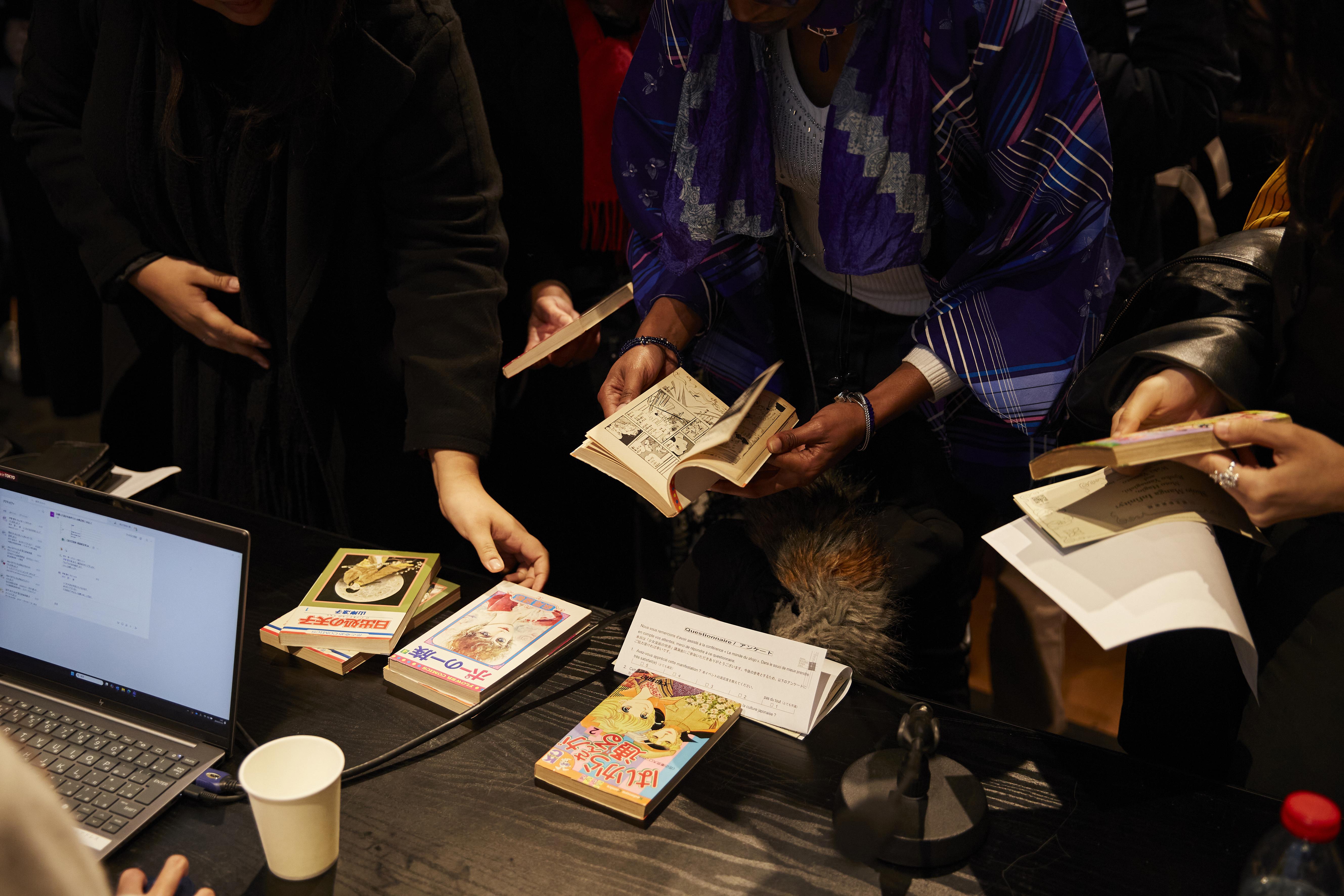
The in-depth exchanges with Bruno Pham shed light on the reception of these works in France and on the contemporary challenges surrounding their publication. He notably pointed out the gap between the critical recognition of shojo manga and the economic constraints weighing on publishing. The selection of titles is often based on their length, accessibility, and distribution potential, which can impose restrictive choices. Added to this are material difficulties linked to the archiving of original artwork in Japan, which complicate both editorial work and exhibition-making.
Rei Yoshimura then focused on the work of three major women authors, chosen to embody the diversity and continuity of shojo manga across several decades: Moto Hagio, Ryoko Yamagishi, and Waki Yamato. “If we decided to present these three authors, it was to show the important role they played in the history of manga, but also to explore in depth what a manga artist’s career can be,” the curator explained. Through their works, she highlighted long artistic trajectories marked by a constant capacity for renewal. These creations testify to a singular relationship to space, the body, and emotion, as well as to an ongoing dialogue with historical and cultural contexts, both Japanese and Western. “The baby-boom generation strongly supported the manga industry, but these authors are now nearly 80 years old. I think we will have fewer and fewer opportunities to hear their voices, so collecting their testimonies is extremely important,” she added.
Among these central figures, Moto Hagio occupies a foundational position. Active since the late 1960s, she established herself as one of the creators who profoundly renewed the language of shojo manga. Her emblematic work, The Poe Clan, represents a major milestone, both for its narrative ambition and its formal choices. Initially conceived as a succession of short stories set in the same universe, the series circumvented the editorial constraints of the time and developed a fragmented temporality based on repetition, memory, and melancholy. The staging of space and time is particularly innovative, with layered imagery, shifting points of view, rhythmic ruptures, and expressive uses of stippling combining to create a singular atmosphere. This work, continued and enriched several decades after its first publication, illustrates Moto Hagio’s ability to anchor her practice in long-term creative continuity while maintaining a high level of formal rigor.
Ryoko Yamagishi’s trajectory, by contrast, is distinguished by its anchoring in artistic and historical themes treated with great dramatic intensity. Her manga Arabesque belongs to a tradition of ballet-centered narratives that were widespread in shojo manga of the 1960s, but stands apart through a radically different approach. Ballet is no longer a simple aesthetic motif, but a demanding art, lived as a total vocation that engages both bodies and lives. The drawing, marked by rigorous realism, reflects in-depth work on anatomy, posture, and movement, nourished by the author’s own experience in classical dance. Ryoko Yamagishi also explores historical manga with great interpretive freedom, notably in a work devoted to Prince Shotoku, a major figure of sixth-century Japan. By integrating introspective, spiritual, and emotional dimensions, she moves beyond the framework of historical narrative to question solitude, genius, and desire, opening the way to narrative forms that would have a lasting influence on manga, particularly in the development of boys’ love.
Finally, Rei Yoshimura turned to the work of Waki Yamato, characterized by her ability to combine entertainment, historical precision, and the portrayal of female figures in search of autonomy. Haikara-san: Here Comes Miss Modern, set in the Taisho era, follows a young woman who gradually gains independence through work, love, and the redefinition of her social role. The care devoted to costumes, changes of dress, and sartorial details fully participates in the narrative and finely conveys the transformations of Japanese society in the early twentieth century. Waki Yamato pays particular attention to the visual construction of double-page spreads and to the emotional clarity of scenes, while integrating humorous registers that strengthen the reader’s attachment to the story. Her adaptation of The Tale of Genji constitutes another high point of her career. By transposing a foundational text of Japanese literature, she succeeds in preserving its aesthetic of ellipsis and suggestion, demonstrating how manga can become a powerful tool of cultural and educational transmission, recommended both for students and for the general public.
Beyond historical analysis, however, the discussion between Rei Yoshimura and Bruno Pham opened perspectives on the future of shojo manga. As Pham noted, if contemporary productions sometimes appear lighter than those of the 1970s, this evolution must be understood within a more socially peaceful context. Shojo manga, as a mirror of Japanese society, nonetheless continues to address an extremely diverse readership, capable of embracing narratives of varied tones, including philosophical and existential ones.
Running throughout the conference was a reminder that shojo manga cannot be reduced to a fixed category. It constitutes a dynamic artistic field, deeply linked to Japan’s social, economic, and cultural transformations. Through the combined perspectives of research, museography, and publishing, the event demonstrated how these works, long marginalized, now occupy an essential place in manga history and in contemporary reflections on cultural transmission.
The event delighted participants, most of them keen connoisseurs of the shojo world. Cédric remarked, “The conference was fascinating, and this kind of event, which intellectualizes manga, is extremely rare. It really does a lot of good.” Rozenn echoed this sentiment: “When people talk about manga, many stop at shonen. Shojo is very often forgotten, or else seen as a minor genre. It’s wonderful to highlight women authors who shaped the field and who are not necessarily well known to the French public.”
(Reports by Clémence Leleu, journalist)
| Date & Time |
January 22 (Thu), 2026 |
| Venue | The Maison de la culture du Japon à Paris |
| For whom | All |
| Participants | 108 |
 |
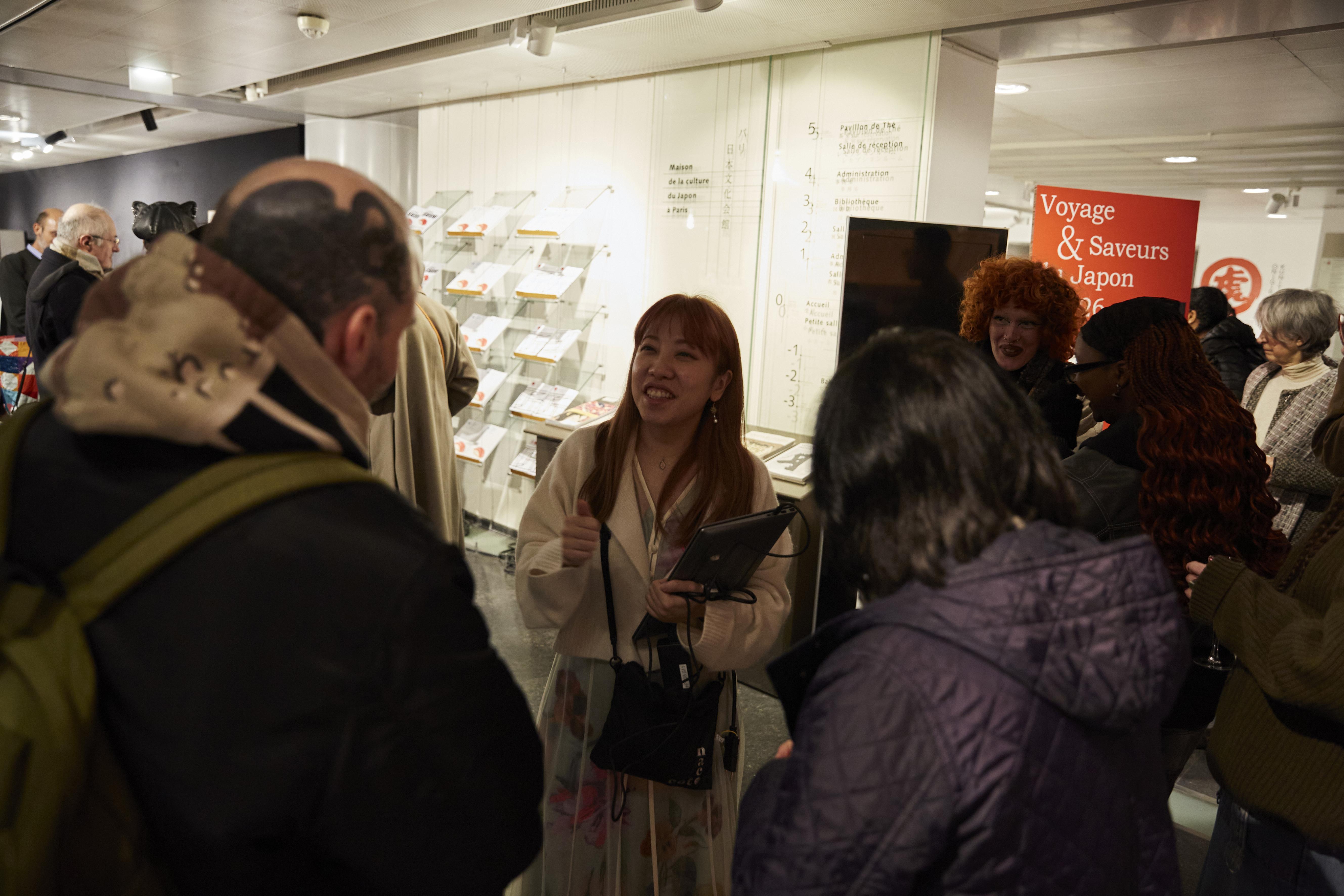 |
Photo: Iorgis Matyassy
- Organized by
-
The National Art Center, Tokyo; The Maison de la culture du Japon à Paris; Japan Arts Council; Agency for Cultural Affairs, Government of Japan